Editorial image illustrating Does a Foldable Screen Actually Fix the Dual-Screen Problem in DS Emulation?
Playing The World Ends With You on a standard 6.7-inch OLED slab in 2024 was an exercise in frustration. I spent more time toggling visibility settings than actually engaging with the combat system. The core issue wasn't the processing power—modern chipsets crush the Nintendo DS architecture without breaking a sweat. The bottleneck was physical geometry. The dual-screen design of the DS, and particularly the clamshell nature of the 3DS, relies on a verticality and separation that modern 16:9 or 20:9 aspect ratio phones simply cannot provide without cannibalizing the play area.
When the foldable market matured in late 2025, I decided to migrate my entire portable library to a book-style foldable. The difference was not merely incremental; it was fundamental. The shift from a single pane of glass to a hinged, dual-panel display fundamentally alters how we interact with legacy touch-based titles.
The Geometry of Frustration on Slab Phones
For years, the Android emulation community relied on "hybrid" layouts to cram the DS's two screens onto one display. You have the top screen, usually scaled down to about 70% of its native resolution, floating above the bottom touchscreen. On a device with a 6.1-inch display, this leaves you with a playing area roughly the size of a credit card. If you are playing a turn-based RPG like Pokémon HeartGold, this is manageable. The action is static, and you rarely need rapid input on the touch screen.
But try playing Mario Kart DS or Zelda: Phantom Hourglass. In Phantom Hourglass, you must navigate the seas using the stylus while watching Link on the top screen. On a slab phone, your thumb or stylus inevitably obscures the top screen while you interact with the bottom one. You are forced to constantly glance around your own hand. Furthermore, the virtual interface (D-pad, ABXY buttons) usually consumes another 15% of the vertical height. You are effectively playing a Game Boy Micro game inside a letterboxed nightmare.
This issue is compounded by the aspect ratio. The DS screens are 256x192 pixels, a 4:3 ratio. Phones are elongated rectangles. To fit two 4:3 screens on a 20:9 display, the emulator must pillarbox the sides aggressively or stretch the image, resulting in distorted pixels and blurred text. High-resolution upscaling techniques like FSR and XeSS have done wonders for PS2 emulation, but no amount of anti-aliasing can fix the fact that you simply cannot see the UI.
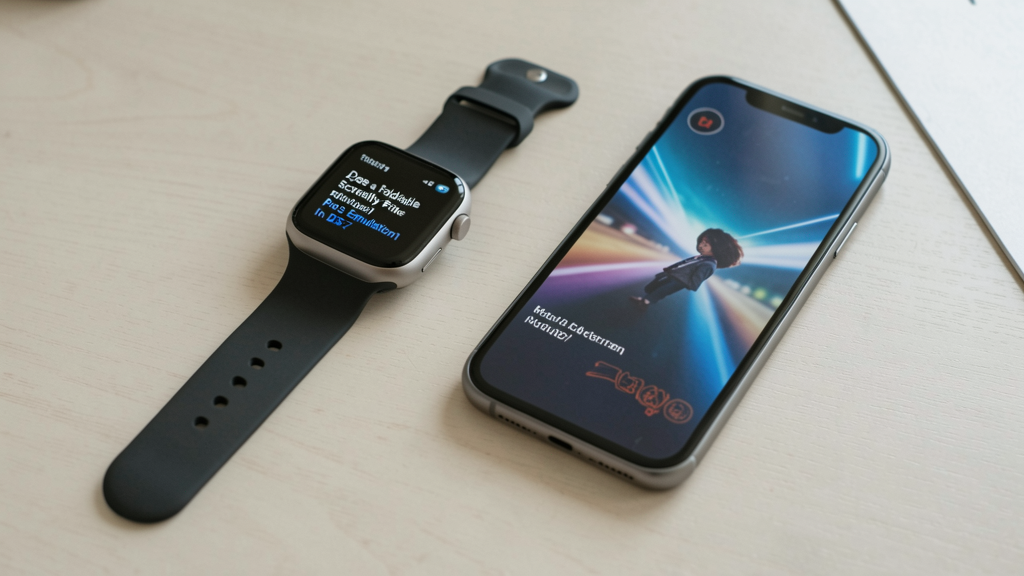
How the Hinge Changes the Gameplay Loop
Unfolding a device like the Galaxy Z Fold 6 or the Open 2 (2026 model) places two distinct, high-resolution touch panels side-by-side. In landscape mode, this mimics the exact physical footprint of a closed DS clamshell. The top screen maps naturally to the left half of the foldable, and the bottom screen maps to the right half. Suddenly, you have regained the original intent of the hardware design.
There is a tangible psychological benefit to this separation. When playing Ghost Trick: Phantom Detective, the "Sissel" gameplay occurs on the top screen while the inventory and puzzle mechanics sit below. On a foldable, my eyes can dart between the two panels without the brain having to mentally recalibrate the distance or overlap of the images. The physical gap of the hinge actually aids focus, acting as a bezel that separates "action" from "information."
However, the software side requires specific configuration. Most emulators, such as DraStic or the more modern MelonDS ports, default to a stretched single-screen view on foldables. You must manually assign the display output to "Separate Windows" or "Dual Screen" mode in the display settings. Once configured, the operating system treats each panel as an independent canvas. This allows you to lock the top screen at the native 4:3 aspect ratio with black bars on the sides, preserving pixel perfection, while keeping the bottom screen fully accessible for stylus inputs.
Input Latency and the Stylus Problem
There is a caveat to the foldable experience that enthusiasts often overlook: digitizer latency. Foldable screens, particularly on the inner display, often use a different layering technology than rigid glass slabs to accommodate the folding mechanism. This can sometimes result in a slight increase in touch latency compared to a standard smartphone.
When I revisited Elite Beat Agents, a rhythm game that demands millisecond-precise timing, I initially missed several beats on the foldable that I would have hit on my old slab. The flexible plastic protector layer found on many 2026 foldables creates a tiny bit of drag that can throw off rapid stylus flicks. I solved this by disabling the touch layer on the top screen entirely within the emulator settings and mapping the D-pad and face buttons to a Bluetooth controller connected via low-latency mode. This turns the top screen into a pure display, mitigating the touch latency issue entirely.
For games that require constant touch interaction, like The Legend of Zelda: Spirit Tracks, the learning curve is steeper. You have to learn to press slightly harder or account for that microsecond of delay. It is a trade-off. You gain visibility but lose a fraction of the raw tactile responsiveness of a rigid, capacitive glass panel.
Is the Foldable the Ultimate Emulation Handheld?
While the form factor is undeniably superior, the practicality is hindered by software fragmentation. Not every emulator in the Emulation category has been optimized to handle the hinge correctly. Some titles refuse to span both screens, forcing you to play in a tiny window in the center of one panel. Furthermore, modifying system files or installing custom launchers to force resolution scaling on these fragile devices carries significant risk. A bricked foldable is far more expensive to replace than a standard Android phone.
If you are willing to tinker with the settings—specifically disabling the "Landscape orientation lock" in the app manifest and forcing specific display densities—the foldable is unmatched. It transforms the Nintendo DS from a curiosity you check for five minutes into a console you can play for five hours.
The real question isn't whether the hardware is powerful enough; it is whether the form factor respects the software's original design constraints. The slab phone forces the game to conform to a narrow, tall video player shape. The foldable allows the game to breathe. For preservationists and dedicated players, that space is worth the premium price tag.
The Verdict on Portable Preservation
Switching to a foldable has fundamentally changed how I value my library. Titles that were previously unplayable due to control clutter are now comfortable. The experience validates the concept that preservation is not just about keeping the code alive; it is about maintaining the physical context in which that code was meant to be consumed.
As we look forward, the future of portable emulation likely lies not in more powerful chips, but in more versatile displays. The Nintendo 3DS and its dual-screen lineage were oddities in their time, but they offered a gameplay utility that single-screen phones spent a decade trying to suppress. In 2026, folding technology has finally caught up, allowing us to stop fighting the interface and start enjoying the game. Just remember to sideload your apps carefully and keep backups of your save files; manipulating the display drivers on these devices can sometimes trigger stability bugs in non-standard ROMs.